




Coco Peat vs Peat Moss vs Perlite – Which Growing Medium Is Best? | Vinatap Vietnam
A professional comparison of coco peat, peat moss, and perlite to help growers choose the most effective and sustainable growing medium.
<article class="vinatap-article">
<h1 style="color:#2e7d32;">
Coco Peat vs Peat Moss vs Perlite – Which Growing Medium Is Best?
</h1>
<p>
Choosing the right growing medium is one of the most critical decisions for plant health,
yield, and long-term soil performance.
</p>
<p>
Among the most popular options worldwide are <strong>coco peat</strong>,
<strong>peat moss</strong>, and <strong>perlite</strong>.
Each has advantages — but not all are suitable for every crop or climate.
</p>
<p>
This guide from <strong>Vinatap Vietnam</strong> compares these three substrates
based on real farming experience, not marketing claims.
</p>
<p>
If you are new to coco-based substrates, read our pillar article first:
<a href="/en/coco-peat-vietnam-growing-medium-guide.html">
<strong>What Is Coco Peat? Complete Growing Medium Guide</strong>
</a>
</p>
<h2 style="color:#2e7d32;">1. Coco Peat – The Modern Organic Growing Medium</h2>
<p>
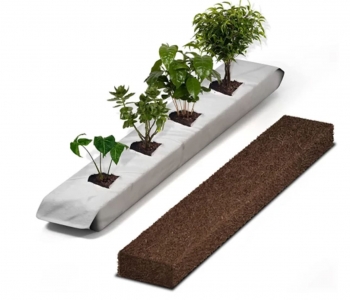
Coco peat is made from processed coconut husk fiber.
It is widely used in hydroponics, nurseries, greenhouses,
and commercial vegetable farming.
</p>
<strong>Key advantages:</strong>
<ul>
<li>High water retention with excellent aeration</li>
<li>Stable pH (5.8–6.5)</li>
<li>Low EC versions available for sensitive crops</li>
<li>Renewable & environmentally friendly</li>
<li>Reusable and long-lasting</li>
</ul>
<p>
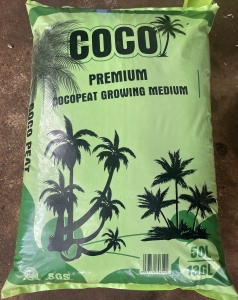
Vinatap supplies factory-washed coco peat in multiple formats:
<a href="/en/coco-peat-50l.html">50L bags</a>,
<a href="/en/coco-peat-1000l.html">1000L jumbo bags</a>,
and customized blends.
</p>
<h2 style="color:#2e7d32;">2. Peat Moss – Traditional but Limited</h2>
<p>
Peat moss is harvested from natural peat bogs and has been used
for decades in horticulture.
</p>
<strong>Advantages:</strong>
<ul>
<li>Good moisture retention</li>
<li>Lightweight</li>
</ul>
<strong>Limitations:</strong>
<ul>
<li>Non-renewable resource</li>
<li>Environmental restrictions in many countries</li>
<li>Decomposes faster than coco peat</li>
<li>Lower structural stability over time</li>
</ul>
<p>
Due to sustainability concerns, many growers are replacing peat moss
with coco peat as a long-term solution.
</p>
<h2 style="color:#2e7d32;">3. Perlite – Excellent Aeration, No Nutrients</h2>
<p>
Perlite is a volcanic mineral expanded at high temperature.
It is often mixed with other substrates.
</p>
<strong>Advantages:</strong>
<ul>
<li>Excellent drainage</li>
<li>Improves oxygen at root zone</li>
<li>Lightweight</li>
</ul>
<strong>Limitations:</strong>
<ul>
<li>No nutrient holding capacity</li>
<li>Does not retain moisture</li>
<li>Must be mixed with another medium</li>
</ul>
<p>
Perlite works best when combined with coco peat,
not as a standalone growing medium.
</p>
<h2 style="color:#2e7d32;">4. Side-by-Side Comparison</h2>
<table border="1" cellpadding="8" cellspacing="0">
<tr>
<th>Feature</th>
<th>Coco Peat</th>
<th>Peat Moss</th>
<th>Perlite</th>
</tr>
<tr>
<td>Water retention</td>
<td>High</td>
<td>High</td>
<td>Low</td>
</tr>
<tr>
<td>Aeration</td>
<td>High</td>
<td>Medium</td>
<td>Very High</td>
</tr>
<tr>
<td>Nutrient holding (CEC)</td>
<td>High</td>
<td>Medium</td>
<td>None</td>
</tr>
<tr>
<td>Sustainability</td>
<td>Excellent</td>
<td>Poor</td>
<td>Good</td>
</tr>
<tr>
<td>Reusability</td>
<td>High</td>
<td>Low</td>
<td>High</td>
</tr>
</table>
<h2 style="color:#2e7d32;">5. Best Choice by Application</h2>
<ul>
<li><strong>Hydroponics:</strong> Coco peat + perlite</li>
<li><strong>Greenhouse vegetables:</strong> Coco peat or coco peat + husk chips</li>
<li><strong>Orchids:</strong> Coco husk chips</li>
<li><strong>Seedlings:</strong> Low EC coco peat</li>
<li><strong>Organic farming:</strong> Coco peat (washed & buffered)</li>
</ul>
<p>
Learn recommended mixing ratios here:
<a href="/en/coco-peat-coco-husk-chip-ratios.html">
<strong>Best Coco Peat & Coco Husk Chip Ratios</strong>
</a>
</p>
<h2 style="color:#2e7d32;">6. Why Growers Choose Vinatap Coco Peat</h2>
<ul>
<li>Factory-washed & Low EC options</li>
<li>Consistent particle size & moisture</li>
<li>Export-grade quality control</li>
<li>Direct manufacturer pricing</li>
</ul>
<p>
Explore Vinatap growing media:
</p>
<ul>
<li><a href="/en/coco-peat-low-ec.html">Low EC Coco Peat</a></li>
<li><a href="/en/coco-husk-chips-vietnam.html">Coco Husk Chips</a></li>
<li><a href="/en/coco-peat-50l.html">Coco Peat 50L</a></li>
<li><a href="/en/coco-peat-1000l.html">Coco Peat 1000L Jumbo Bag</a></li>
</ul>
<h2 style="color:#2e7d32;">Contact Vinatap Vietnam</h2>
<p>
<strong>Vinatap Vietnam Co., Ltd</strong><br>
Long Binh Industrial Zone, Bien Hoa, Dong Nai, Vietnam<br>
Email: vinatap@gmail.com<br>
WhatsApp: +84 888 888 8609<br>
Website: <a href="https://www.vinatap.vn">www.vinatap.vn</a>
</p>
</article>


.jpeg)
 Online: 12
 Total access: 4903770