




Best Coco Peat Mix Ratios for Greenhouse Vegetables (70/30 – 50/50)
Coco peat and perlite are two popular greenhouse substrates. This article compares their performance to help growers choose the best growing medium for higher yield and healthier roots.
Coco Peat vs Perlite – Which Growing Medium Is Better for Greenhouse Crops?
Choosing the right growing medium is one of the most important decisions for greenhouse growers. Water retention, aeration, nutrient availability, and sustainability all directly affect crop performance.
Among modern soilless substrates, coco peat and perlite are two of the most commonly compared materials. This guide explains their differences and helps you choose the best option for greenhouse cultivation.
Contents
- What Is Coco Peat?
- What Is Perlite?
- Coco Peat vs Perlite – Key Differences
- Which Crops Perform Best in Coco Peat?
- When to Combine Coco Peat and Perlite
- Frequently Asked Questions
1. What Is Coco Peat?
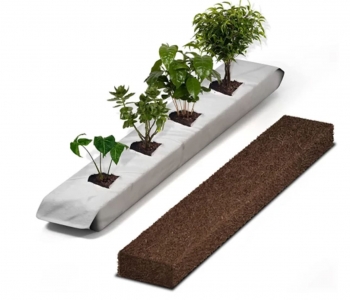
Coco peat, also known as coco coir pith, is a natural growing medium produced from coconut husk fibers. It is widely used in greenhouse and hydroponic systems due to its excellent water retention and root-friendly structure.
Vinatap coco peat is thoroughly washed, dried, and sieved to achieve stable pH and low EC levels. Growers often choose Low EC Coco Peat for sensitive crops and nutrient-controlled systems.
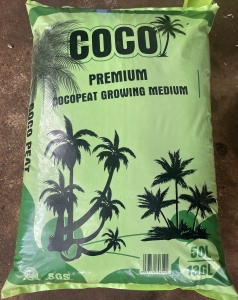
For ready-to-use formats, many greenhouses prefer Coco Peat 50L Bags because of their convenience and consistency.
2. What Is Perlite?
Perlite is a volcanic mineral expanded at high temperatures. It is extremely lightweight and mainly used to improve drainage and air circulation in growing media.
Perlite contains no nutrients and holds very little water. Its primary role is to create air space around plant roots, especially in mixes that tend to compact.
3. Coco Peat vs Perlite – Key Differences
| Property | Coco Peat | Perlite |
|---|---|---|
| Water retention | High | Low |
| Aeration | Good | Excellent |
| Nutrient holding (CEC) | High | None |
| Sustainability | Renewable & eco-friendly | Non-renewable mineral |
| Reusability | Multiple crop cycles | Limited |
4. Which Crops Perform Best in Coco Peat?
Coco peat is ideal for greenhouse crops that require stable moisture and nutrient availability, including:
- Tomatoes, cucumbers, peppers
- Leafy greens
- Strawberries and berries
- Flowers and ornamental plants
Its sponge-like structure helps reduce irrigation frequency while maintaining healthy oxygen levels around roots.
5. When to Combine Coco Peat and Perlite
Many professional growers use coco peat and perlite together to balance water retention and drainage.
- 70% coco peat + 30% perlite – ideal for vegetables
- 50% coco peat + 50% perlite – ideal for seedlings and cuttings
This combination maximizes root development and minimizes water stress, especially in intensive greenhouse systems.
6. Frequently Asked Questions
Is coco peat better than perlite?
Coco peat is better for moisture and nutrient retention, while perlite improves aeration. The best choice depends on crop needs.
Can coco peat replace perlite completely?
In many cases, yes. However, perlite can still be useful in mixes requiring faster drainage.
Which is more sustainable?
Coco peat is a renewable by-product of coconut processing, making it significantly more sustainable than perlite.
Contact Vinatap Vietnam
Vinatap Vietnam Co., Ltd
Long Binh Industrial Zone, Bien Hoa, Dong Nai, Vietnam
Email: vinatap@gmail.com
WhatsApp: +84 888 888 8609
Website: www.vinatap.vn


.jpeg)
 Online: 11
 Total access: 4903776