




Coco Peat & Coco Husk Chip
Coco husk chip and coco peat are both coconut-based substrates with different functions. Learn which medium provides better drainage, aeration, and root performance for your crops.
Coco Husk Chip vs Coco Peat – Which Substrate Is Better for Drainage & Root Health?
Coconut-based growing media have become the global standard for greenhouse and soilless cultivation. Among them, coco husk chip and coco peat are the two most widely used substrates.
Although they come from the same raw material, their structure, performance, and applications are very different. This article helps growers and importers choose the right medium based on crop needs and cultivation systems.
Contents
- What Is Coco Husk Chip?
- What Is Coco Peat?
- Coco Husk Chip vs Coco Peat – Technical Comparison
- Best Applications for Coco Husk Chip
- Best Applications for Coco Peat
- Recommended Mix Ratios
- FAQs
1. What Is Coco Husk Chip?
Coco husk chip is produced by cutting coconut husks into coarse pieces, typically ranging from 5–20 mm. This structure creates large air spaces, allowing excellent drainage and oxygen flow around plant roots.
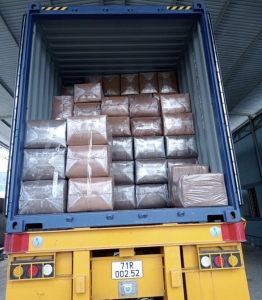
Vinatap supplies washed and buffered Coco Husk Chips with controlled EC levels for greenhouse and export markets.
2. What Is Coco Peat?
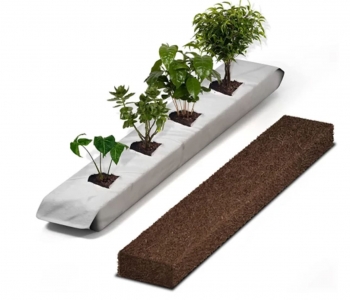
Coco peat (coco coir pith) is the fine fraction obtained during coconut fiber processing. It is well known for its high water-holding capacity and nutrient retention.
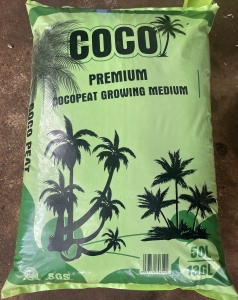
For precision agriculture, growers often choose Low EC Coco Peat or ready-packed Coco Peat 50L Bags for consistent performance.
3. Coco Husk Chip vs Coco Peat – Technical Comparison
| Parameter | Coco Husk Chip | Coco Peat |
|---|---|---|
| Particle size | Coarse (5–20 mm) | Fine (0–6 mm) |
| Drainage | Excellent | Moderate |
| Water retention | Low–Medium | High |
| Aeration | Very high | Good |
| Nutrient holding | Low | High (CEC) |
4. Best Applications for Coco Husk Chip
Coco husk chip is ideal for crops and systems that require fast drainage and high oxygen availability:
- Orchids and epiphytic plants
- Blueberries and strawberries
- Tomatoes in high-irrigation systems
- Vertical farming and grow bags
Its structure helps prevent root rot and improves root respiration in humid greenhouse environments.
5. Best Applications for Coco Peat
Coco peat is preferred when moisture stability and nutrient buffering are critical:
- Leafy greens
- Seedlings and propagation
- Hydroponic systems
- Potting mixes and soil conditioning
It significantly reduces irrigation frequency and improves fertilizer efficiency.
6. Recommended Mix Ratios
Many professional growers combine both materials to achieve balanced performance:
- 60% coco peat + 40% coco husk chip – vegetables
- 50% coco peat + 50% coco husk chip – strawberries
- 30% coco peat + 70% coco husk chip – orchids
7. Frequently Asked Questions
Is coco husk chip better than coco peat?
Neither is better in all cases. Coco husk chip excels in drainage, while coco peat is superior for moisture retention.
Can coco husk chip replace coco peat?
For high-drainage crops, yes. However, most growers prefer blends to balance water and air.
Are both substrates reusable?
Yes. When properly managed, both coco husk chip and coco peat can be reused for multiple crop cycles.
Contact Vinatap Vietnam
Vinatap Vietnam Co., Ltd
Long Binh Industrial Zone, Bien Hoa, Dong Nai, Vietnam
Email: vinatap@gmail.com
WhatsApp: +84 888 888 8609
Website: www.vinatap.vn


.jpeg)
 Online: 11
 Total access: 4903768