



VinaTap Manufacturing Process | Cocopeat, Husk Chips, Grow Bags & Biochar
Explore VinaTap Vietnam’s manufacturing process for cocopeat, coco husk chips, grow bags, pellets, biochar and export-grade coir products.
VinaTap Manufacturing Process – From Coconut Husk to Export-Ready Growing Media
At VinaTap Vietnam, manufacturing is built around one principle: control the raw material, control the process, and control the final product quality.
From mature coconut husks collected in Southern Vietnam to washed cocopeat, coco husk chips, grow bags, compressed blocks, seed pellets, loose substrates, jumbo bags and selected biochar products, VinaTap operates an integrated production system designed for professional growers, importers, distributors and greenhouse projects worldwide.
Our production process combines mechanical processing, clean-water washing, optional calcium buffering, controlled dewatering, thermal drying, screening, compression, packaging and quality control.
1. Raw Material Selection
The manufacturing process begins with carefully selected agricultural raw materials.
Coconut-Based Raw Materials
- Mature coconut husk (Cocos nucifera)
- Coconut coir pith
- Coconut fiber
- Coconut husk chips
Raw coconut husks are sourced mainly from coconut-growing areas in Southern Vietnam. Incoming materials are inspected before processing to remove stones, plastics, metals and other foreign materials.
No binders, glues or synthetic fillers are required for standard VinaTap coco coir substrates.
2. Coconut Husk Crushing & Fiber Separation
Selected coconut husks are mechanically crushed and processed to separate the main usable fractions:
- Coco peat / coir pith: fine and medium coconut particles used for growing media.
- Coco husk chips: larger coconut husk particles used to improve drainage and aeration.
- Coir fiber: short or long fiber fractions used in substrate blends and other coir products.
Particle size can be adjusted according to the intended application and customer specification.
Cocopeat: approximately 0–6 mm
Coco Husk Chips: commonly 5–20 mm
Short Fiber: customized according to buyer requirements
3. Washing & EC Reduction
Fresh coconut-derived materials naturally contain soluble salts, especially potassium, sodium and chloride. For professional horticulture, these salts must be controlled.
VinaTap therefore uses a multi-stage washing process with clean fresh water.
Main Objectives of Washing
- Reduce excess soluble salts
- Lower electrical conductivity (EC)
- Remove soluble impurities
- Improve consistency between production batches
- Prepare the material for greenhouse and hydroponic applications
Depending on the target specification, cocopeat and coco husk chips may pass through several washing and draining stages.
For standard washed Low EC products, the typical target is:
- EC: ≤ 0.5 mS/cm
- pH: approximately 5.5–6.8
Lower EC specifications can be produced subject to customer requirements and agreed testing methods.
4. Optional Calcium Buffering
For sensitive crops and professional hydroponic systems, washed coco coir can be further processed through a calcium buffering stage.
During buffering, the coir is soaked in a controlled calcium solution.
Why Buffer Coco Coir?
- Reduce excessive exchangeable potassium and sodium
- Introduce calcium into the cation exchange sites
- Improve nutrient stability
- Reduce nutrient imbalance after planting
- Prepare substrate for high-value crops
Buffering time and calcium concentration are adjusted according to the product specification and buyer requirements.
After buffering, the material is rinsed with clean water before further processing.
5. Mechanical Dewatering
After washing or buffering, the coco material contains a high level of moisture.
VinaTap uses mechanical dewatering systems such as belt pressing, roller pressing and screw pressing to remove excess water before thermal drying.
This step significantly reduces the energy required during the drying stage and improves production consistency.
Typical Moisture Reduction
Wet washed material may enter the dewatering system at approximately 70–80% moisture and is mechanically reduced before entering the drying system.
6. Thermal Drying & Heat Treatment
After mechanical dewatering, the substrate enters VinaTap's controlled thermal drying system.
The factory uses biomass-based heat sources and indirect hot-air drying to reduce moisture while avoiding direct flame contact with the finished substrate.
Main Purposes
- Reduce moisture to the required finished-product specification
- Improve storage stability
- Reduce biological contamination risk
- Prepare the substrate for compression and export
For heat-treated export products, VinaTap controls the material temperature and residence time according to the agreed production protocol.
Typical finished moisture for compressed products is approximately:
- 12–18% for dry compressed cocopeat products
Heat-treatment records can be maintained for export programs requiring specific phytosanitary or quarantine documentation.
7. Screening & Particle Classification
After drying, the material is screened and classified.
Depending on the product, screening is used to:
- Remove oversized fibers
- Reduce fine dust
- Control particle-size distribution
- Separate cocopeat, chips and fiber fractions
- Prepare customized substrate blends
Different screening specifications are available for greenhouse crops, nurseries, berries, orchids, hydroponics and animal or reptile bedding applications.
8. Cocopeat Block & Brick Manufacturing
Screened dry cocopeat can be compressed into high-density blocks and bricks for efficient international transportation.
Main Formats
- 5 kg cocopeat blocks
- 1 kg blocks
- 650 g coco bricks
- 500 g bricks
- 300 g bricks
The material is weighed, filled into the press chamber and compressed under high hydraulic pressure.
No chemical binder is required. The natural physical structure of compressed coco coir allows the block to retain its shape during handling and shipping.
Typical 5 kg Block Specification
- Approximate size: 30 × 30 × 12 cm
- Weight: 5.0 kg ± tolerance
- Moisture: typically ≤15–18%
- EC: Low EC grades typically ≤0.5 mS/cm
- Expansion: approximately 70–75 L per block depending on specification
View VinaTap Cocopeat Blocks & Bricks
9. Coco Husk Chip Production
Coconut husk chips are produced from selected coconut husks and mechanically cut into controlled particle sizes.
The chips can then be:
- Washed
- Low EC processed
- Calcium buffered
- Heat treated
- Screened
- Compressed into blocks or packed loose
Typical Sizes
- 5–10 mm
- 10–20 mm
- Custom grades
Coco husk chips provide higher air-filled porosity than fine cocopeat and are commonly used for orchids, greenhouse substrates, berries, high-value crops and customized growing-media blends.
View VinaTap Coco Husk Chip Products
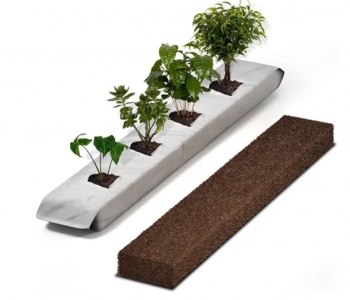
10. Coco Coir Grow Bag Manufacturing
VinaTap manufactures professional coco coir grow bags for greenhouse and hydroponic cultivation.
Grow bag substrate can be formulated using different ratios of:
- Cocopeat
- Coco husk chips
- Short coir fiber
Typical Mixing Ratios
- 70% Cocopeat + 30% Coco Husk Chips
- 60% Cocopeat + 40% Coco Husk Chips / Fiber
- 50% Cocopeat + 50% Husk / Fiber
- Customized blends according to crop requirements
After blending, the substrate is compressed into slabs and inserted into UV-resistant PE grow bags.
Typical Applications
- Tomato
- Cucumber
- Melon
- Chili
- Strawberry
- Blueberry
- Flowers
- Other greenhouse crops
Drainage holes, planting holes, dimensions and substrate composition can be customized.
View VinaTap Coco Coir Grow Bags
11. Loose Cocopeat & Jumbo Bag Production
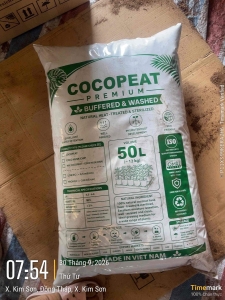
For customers requiring ready-to-use or bulk growing media, VinaTap supplies loose cocopeat in multiple packaging formats.
Available Formats
- 50 L bags
- 100 L bags
- 1,000 L bulk bags
- 2,000 L bulk bags
- 6,000 L jumbo bags
Loose products can be supplied as washed, Low EC or buffered substrates depending on the project requirement.
Bulk and jumbo formats are suitable for:
- Commercial greenhouse farms
- Growing-media manufacturers
- Landscaping projects
- Professional nurseries
- Large-scale agriculture
View VinaTap Bulk & Jumbo Cocopeat
12. Seed Pellet, Coco Disc & Propagation Plug Manufacturing
Fine washed cocopeat can also be processed into compact propagation products.
Available Formats
- Coco discs
- Coco pellets
- Seed-starting plugs
- Propagation pucks
The substrate is screened to the required fine particle size, blended if necessary and compressed into predetermined dimensions.
Typical diameters include:
36 mm, 42 mm, 50 mm, 68 mm, 80 mm, 100 mm, 120 mm and 150 mm.
Customized formulation, netting and private-label packaging can be developed for nursery and retail programs.
View VinaTap Seed Pellets & Coco Discs
13. Biochar Manufacturing
In addition to coco coir substrates, VinaTap develops biochar products from selected agricultural and biomass feedstocks.
Main Biochar Types
- Rice Husk Biochar
- Coconut Shell Biochar
- Wood Biochar
- Bamboo Biochar
Biochar production involves controlled thermal conversion of biomass under restricted oxygen conditions.
After carbonization, the material is cooled, screened and packed according to the intended agricultural or industrial application.
14. Biomass & Coir Pallet Manufacturing
VinaTap also develops hot-pressed pallets using selected agricultural biomass and coir-based residues.
Raw material is prepared, dried, sized and hot-pressed into pallet molds under controlled pressure and temperature.
Typical Pallet Sizes
- 110 × 110 × 13 cm
- 120 × 110 × 13 cm
- 130 × 110 × 13 cm
The objective is to maximize agricultural residue utilization while providing export-oriented logistics solutions.
15. Final Quality Control
Quality control is performed throughout the production process and before shipment.
Typical Quality Parameters
- Electrical Conductivity (EC)
- pH
- Moisture content
- Particle-size distribution
- Expansion volume
- Bulk density
- Fiber percentage
- Visual contamination
- Compression integrity
Where required, third-party testing may also include:
- Microbiological testing
- Heavy metals
- Salmonella
- E. coli
- Product-specific export or quarantine requirements
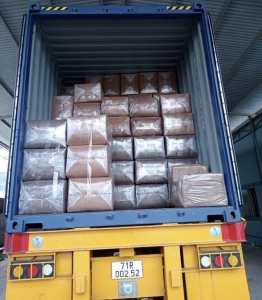
16. Packaging & Container Loading
Finished products are packed according to buyer specifications and export requirements.
Packaging Options
- Individual PE wrapping
- UV-resistant bags
- Woven PP jumbo bags
- Palletized export loading
- Private label / OEM packaging
VinaTap can optimize pallet layout, block count, bag count and container utilization for 20-foot and 40-foot high-cube containers.
17. Export Documentation & Traceability
VinaTap supports international buyers with production and shipping documentation according to destination-market requirements.
Typical Documents
- Commercial Invoice
- Packing List
- Certificate of Analysis (COA)
- Technical Data Sheet (TDS)
- Material Safety Data Sheet (MSDS), where applicable
- Phytosanitary Certificate
- Fumigation Certificate, where required
- Certificate of Origin
- Manufacturer Declaration
- Heat Treatment Declaration
- Third-party inspection documents when agreed
18. Why Global Buyers Choose VinaTap
Factory-Direct Production
Products are manufactured and processed directly through VinaTap's production system rather than sourced solely through trading channels.
Customized Specifications
EC, pH, moisture, particle size, blending ratio, compression, packaging and private labeling can be developed according to buyer requirements.
Flexible Product Range
One manufacturing partner can support multiple formats including cocopeat blocks, bricks, loose bags, jumbo bags, husk chips, grow bags and propagation products.
Export-Oriented Quality Control
Production can be matched with destination-specific phytosanitary, packaging and documentation requirements.
Long-Term B2B Supply
VinaTap works with importers, distributors, greenhouse growers, nurseries, growing-media manufacturers and OEM brands worldwide.
19. Manufacturing Flow Summary
Coconut Husk Selection
↓
Crushing & Separation
↓
Washing & EC Reduction
↓
Optional Calcium Buffering
↓
Mechanical Dewatering
↓
Thermal Drying & Heat Treatment
↓
Screening & Classification
↓
Blending / Compression / Filling
↓
Quality Control
↓
Packaging & Palletizing
↓
Container Loading
↓
Global Export
20. Contact VinaTap for Manufacturing & OEM Projects
Whether you require a standard cocopeat product or a customized growing-media formulation, VinaTap can develop specifications based on your crop, market, packaging and logistics requirements.
VIET NAM VINATAP XD & TM COMPANY LIMITED
Factory: No. 99, Provincial Road 864, Kim Son, Dong Thap, Vietnam
Email: [email protected]
WhatsApp: +84 912 100 118
WhatsApp: +84 888 888 609



 Online: 28
 Total access: 5058603